Catherine Clemente
Echoes of Resilience
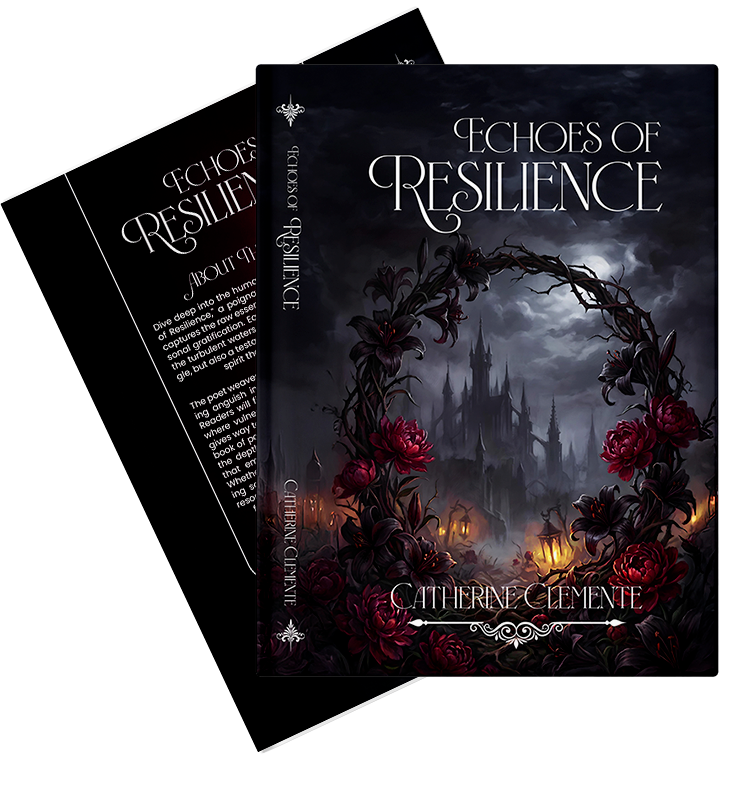
Echoes of Resilience is a haunting and intimate collection of poetry that confronts trauma, betrayal, and survival with unflinching honesty. Through stark imagery and restrained language, Catherine Clemente captures the psychological landscape of abuse, grief, and emotional captivity. Each poem reflects the body’s memory of pain — the anxiety, the silence, the unraveling. This is not a story polished for comfort, but a testimony shaped by lived experience. It is a journey through darkness that refuses to look away. In its rawness lies its strength.
A poetic chronicle of survival, voice, and the courage to endure.
About The Author
Catherine Clemente writes from lived experience. Nearly two decades ago, the tragic murder of her twin brother altered the course of her life, forcing her into a prolonged journey through grief, unanswered questions, and profound emotional reckoning. In addition to this loss, she has navigated the lasting impact of childhood sexual abuse — experiences that shaped both her inner world and her voice as a writer.
Her poetry does not seek to soften reality. Instead, it reflects the psychological and emotional truths of trauma — the anxiety, the silence, the confusion, and the complex bonds that often follow abuse. Through sparse, direct language, she captures what it feels like to endure rather than simply observe pain. Writing became both survival and expression.
Today, Catherine uses her work to give language to experiences that many struggle to articulate. Her writing serves as testimony, reflection, and quiet resistance. In sharing her story, she hopes to remind others that resilience is not always loud — sometimes it is the steady act of continuing to speak.

Catherine Clemente
A Voice Born From Survival
Echoes of Resilience
A Poetic Chronicle of Trauma and Endurance
About the Book
Echoes of Resilience
Spanning fifty deeply personal poems, Echoes of Resilience traces the psychological aftermath of trauma and emotional captivity. The collection explores anxiety, trauma bonding, betrayal, grief, infertility, PTSD, and the exhausting cycle of manipulation that leaves identity fractured and self-trust diminished.
Written in fragmented verse that mirrors emotional rupture, the poems move through shock, numbness, confrontation, relapse, and the painful recognition of unhealthy attachment. Rather than offering resolution, the book documents the process of disentanglement — the slow, deliberate choice to step away from what harms. This is a portrait of survival in motion, not a finished ending.